How investing in new home construction in Florida works: the complete guide
By Renato Lerner, civil engineer and founder of Invision Investments · November 2026
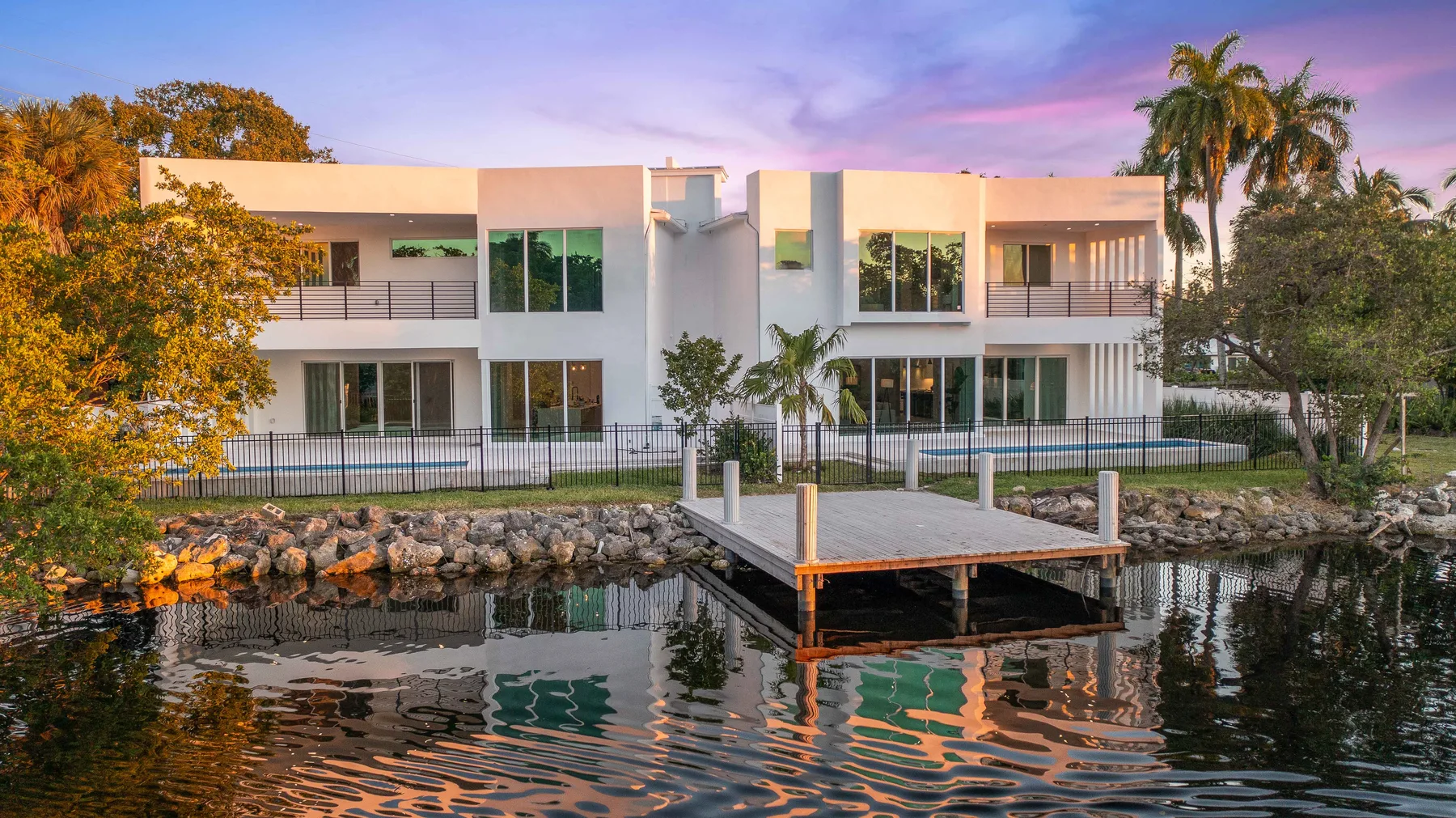
Investing in Florida construction means buying land, building a new home and selling it, with all the money and the property held in a US company owned by the investors themselves. A full cycle takes about 24 months.
This guide covers each step, what makes up the cost, who does what, the local rules and the risks. It is based on our own practice building high-end homes in Fort Lauderdale.
The model in one sentence
The investors own an LLC. The LLC buys the land, hires the design and construction, sells the finished home, and distributes the result or reinvests it in the next project.
The investor does not hand money to a person or to a third-party company. They are a member of the company that owns the asset.
The steps, from funding to sale
- Structure (before anything else). Forming the LLC, opening a bank account in its name and signing the Operating Agreement, the contract between the members. It sets voting, spending approvals and how the result is distributed.
- Land. Choosing the lot and checking it before purchase: zoning, setbacks, flood zone, soil conditions and sale prices of new homes in the neighborhood. The deed is in the LLC's name.
- Design (about 2 months). Architecture and engineering designed for the lot and for the buyer in that neighborhood.
- Approvals (about 4 months). Plan review by the city or county and issue of building permits.
- Construction (about 12 months). Built by the contractor, with official inspections at each stage and monthly reports to the members.
- Sale (about 6 months). Marketing through a broker, negotiation and closing. The LLC receives the proceeds and pays selling costs and commission.
- Result. The profit is distributed to the members or reinvested in a new project.
What it costs
Project capital is the sum of six cost groups. On our high-end projects in South Florida, full construction, including hard and soft costs, runs between US$ 500 and US$ 600 per square foot of built area.
| Cost group | What it includes |
|---|---|
| Land | Lot price and purchase costs |
| Construction | Design, permits, foundation, structure, finishes, pool and landscaping |
| Contingency | A 5% to 10% reserve on construction for the unexpected |
| Contractor fee | Fee set by contract, on the approved budget |
| Carrying costs | Builder's risk insurance, property tax and utilities during the cycle |
| LLC management | Formation, annual renewal, bookkeeping and tax filings |
On the sale, commission and closing costs add up to about 6% of the price. The sale price should be estimated from closed sales of new homes in the same area, never from listings.
Who does what
| Role | Responsibility |
|---|---|
| Investors | Provide the capital, approve the decisions set in the Operating Agreement and receive the result |
| LLC management | Bookkeeping, taxes, payments and reporting |
| General contractor | Design, approvals, construction and support on the sale |
| Broker | Marketing and sale of the finished home |
Local rules every investor should know
- The contractor needs a state license. In Florida, contractor licenses are issued by the Department of Business and Professional Regulation (DBPR). Check the license number before signing any contract.
- Broward and Miami-Dade have the strictest hurricane code in the state. Both counties are in the High-Velocity Hurricane Zone (HVHZ). There, windows, doors, roofs and other products need specific approval. It raises construction cost, but it also adds value to a new home.
- Flood elevation shapes the design. In coastal areas, the FEMA flood map sets the minimum floor elevation. It affects foundation, fill and cost.
Risks and how to reduce them
| Risk | How to reduce it |
|---|---|
| Construction cost above budget | Detailed budget, contingency and a contractor fee fixed on the initial budget |
| Delays in approvals or construction | Design by people who know the local building department, and a schedule with slack |
| Lower sale price | Feasibility study based on closed sales, with a safety margin |
| Contractor problems | Contract in the LLC's name, which can replace the contractor without losing the asset |
| Hurricane during construction | Builder's risk insurance and construction to HVHZ code |
| Slow sale | Budget already includes 6 months to sell; the home can be rented until it sells |
No structure removes business risk. What the LLC guarantees is that the money, the land and the home always stay in the investors' name.
Taxes: what foreign investors need to know
- On the sale: when the seller is foreign, the buyer generally withholds 15% of the gross amount (FIRPTA). It is settled later on the US tax return.
- On inheritance: nonresidents with more than US$ 60,000 in US assets, real estate included, must file a US estate tax return. The right structure reduces this risk.
- In your home country: profit is also taxed where the investor lives. Brazilian residents, for example, face Law 14,754/2023 and recent Receita Federal rulings on LLCs, which call for planning with an accountant who knows both countries.
Checklist before investing
- Will the asset be held in an LLC owned by the investors?
- Does the Operating Agreement set voting, spending approvals and distributions?
- Does the contractor hold an active Florida state license?
- Does the budget include contingency and builder's risk insurance?
- Was the sale price estimated from closed sales?
- Have taxes been planned in the US and in your home country?
Frequently asked questions
How long does a construction project in Florida take? About 24 months: 2 for design, 4 for approvals, 12 for construction and 6 to sell.
How much does it cost to build a high-end home in South Florida? On our projects, between US$ 500 and US$ 600 per square foot of built area, including hard and soft costs, excluding land.
Can a foreigner invest this way? Yes. Foreigners can be members of an LLC that buys land and builds in the US.
What happens if the contractor has problems? Because the contract and the property are in the LLC's name, the members can hire another contractor and continue the work.
Isn't buying a finished home simpler? It is simpler, but a buyer of a finished home pays the builder's margin. See our article "Buy finished or build".
This content is for information only and is not an offer or a promise of return.
Sources: DBPR — Construction Industry Licensing · Broward County — New Single-Family Residential Permitting Requirements · NAHB — Florida Building Code and the High-Velocity Hurricane Zone · IRS — FIRPTA Withholding · IRS — Nonresidents with US assets and estate tax